


From Protest to Progress: Gen Z’s Global Journey
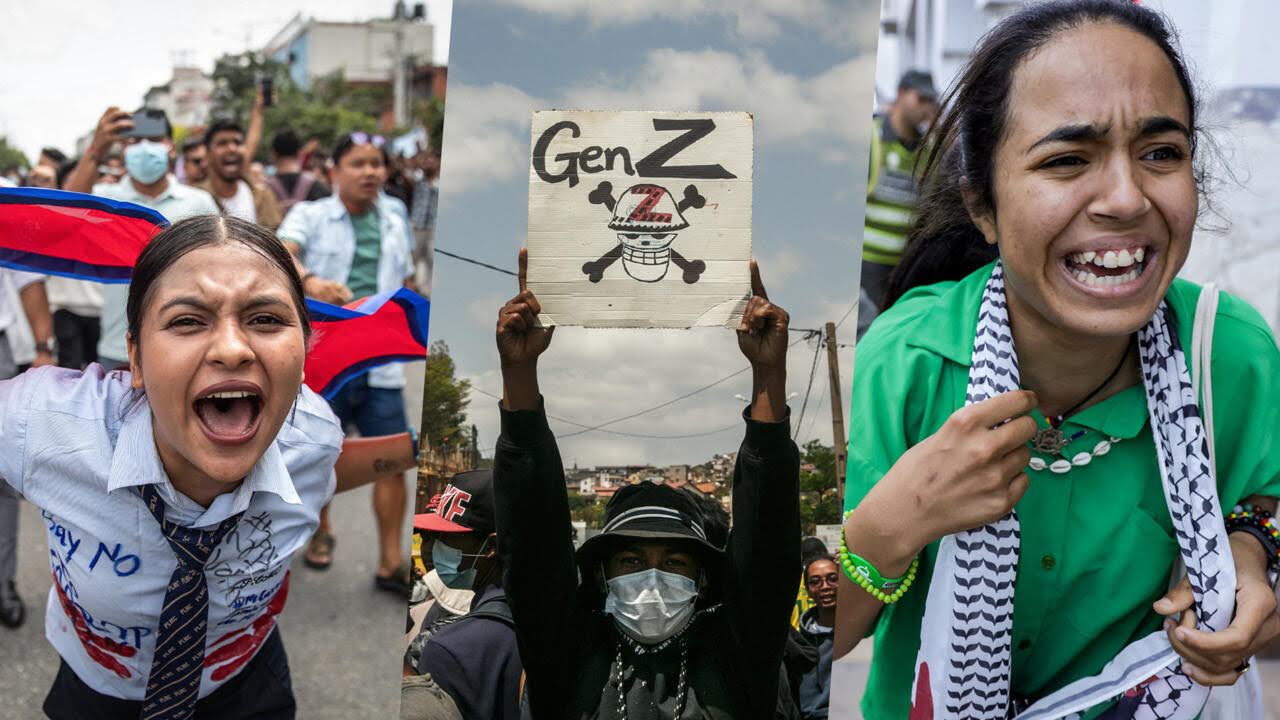
Across the globe, Generation Z is reshaping activism, driven by digital literacy, social media, and a heightened awareness of social, economic, and political issues. From Kathmandu to Rabat, Antananarivo, and Jakarta, young people are taking to the streets and cyberspace to challenge entrenched systems and demand accountability, fairness, and inclusion. While their strategies and outcomes vary, these movements reveal a generation unafraid to confront power and mobilize for change.
Nepal: Social Media Ban Sparks Deadly Uprising
In early 2025, Nepal witnessed one of its most intense waves of protests in decades, triggered by a government ban on social media. Young people, primarily Gen Z and millennials, mobilized rapidly against corruption, entrenched leadership, and the restriction of digital freedom. The protests spread nationwide, particularly in Kathmandu and Pokhara, where students, young professionals, and activists organized marches, teach-ins, and online campaigns despite the blackout.
The demonstrations quickly escalated. Security forces responded with force, resulting in clashes that left more than 70 people dead and dozens injured. In some extreme cases, protesters attacked government offices, and tragically, in one incident, the residence of a former minister’s wife was set on fire, resulting in her death. These shocking events highlighted the depth of frustration and anger driving the movement.
Under mounting pressure, Prime Minister K.P. Sharma Oli resigned, and an interim administration led by Sushila Karki, Nepal’s first female prime minister, assumed power. Elections are scheduled for March 2026. Despite the leadership change, protesters insist that systemic reform is essential, demanding an end to nepotism, economic stagnation, and corruption. While the unrest exacted a heavy toll, it also demonstrated the mobilizing power of Nepal’s youth and their determination to hold leaders accountable.
Morocco: Youth-Led Success Through Institutional Engagement
In Morocco, the Gen Z movement began in late September, fueled by frustrations over high youth unemployment, limited political participation, and glaring inequalities in education and healthcare. Demonstrations started in major cities like Casablanca, Rabat, Marrakech, and Fes, with young people organizing peaceful marches, sit-ins at universities, and online campaigns demanding reforms.
During the first two days, the protests remained largely peaceful. Students and young professionals chanted slogans, carried banners highlighting inequality, and used social media to amplify their demands. However, authorities responded with repressive measures, arresting dozens of participants, imposing temporary detentions, and increasing police presence around city centers.
Tensions escalated when the movement spread to poorer regions, where young protesters from disadvantaged backgrounds joined. In cities like Oujda, Qliaa, and certain neighborhoods in Casablanca, frustrations over systemic neglect and poverty led some participants to clash with security forces. Minor property damage, road blockades, and confrontations were reported, marking a stark contrast with the initial peaceful demonstrations. These episodes underscored the deep socioeconomic divides motivating the youth movement and highlighted the urgency of addressing inequality to prevent further unrest.
King Mohammed VI intervened decisively. He addressed the nation, acknowledging the legitimacy of the youth’s concerns. He ordered a multi-year funding plan exceeding $500 million to improve healthcare and education infrastructure, particularly in underserved areas. Additionally, he mandated initiatives to enhance youth political participation, including the creation of local youth councils and programs facilitating engagement with municipal and national decision-making processes. The King’s statements emphasized that investing in young people was critical for Morocco’s social cohesion and long-term development.
After the King’s speech during the opening of the legislative fall season, several pilot programs were already implemented: public universities expanded scholarship opportunities, regional health centers received funding to improve access and services, and youth councils were operational in key municipalities. Morocco thus became a rare example where youth-led protests, despite initial repression and localized clashes, translated into concrete policy changes. The movement demonstrated the power of organized, persistent advocacy and the impact of responsive leadership in addressing systemic grievances.
Madagascar: Economic Grievances and Fragmented Mobilization
In Madagascar, the Gen Z movement intensified in October 2025, initially sparked by widespread electricity and water shortages. Young people, organized under groups like the Gen Z Collective, mobilized to demand basic services and accountability from President Andry Rajoelina’s government. The demonstrations quickly evolved into a broader uprising against systemic mismanagement, reflecting the frustrations of a population with an average age of just 19.
The protests took a dramatic turn in mid-October when Colonel Michael Randrianirina joined demonstrators, forcing President Rajoelina to flee. Youth leader Olivia Rafetison welcomed the army’s protection, quoting Randrianirina: “We’re for the people, we’ll help you, we are by your side.” Rafetison told Reuters, “Malagasy were coming together for the same cause,” highlighting the cohesion among young activists.
Days later, Randrianirina declared the army in charge and was sworn in as president, promising to lead a civilian government for up to two years before new elections. While youth leaders initially supported the intervention, they expressed mixed feelings. Rafetison noted, “It went from ‘protecting the people’ to taking power. I’m not saying I’m against it . . . but I am a little conflicted.” The army met with youth leaders on the night of the coup, assuring them that their voices would be heard, though follow-up actions remain uncertain.
Madagascar’s young population faces persistent challenges stemming from decades of political mismanagement. Rajoelina, who first became the world’s youngest president at 34 in a 2009 coup, left office in his 50s without delivering essential services or prosperity. World Bank data shows GDP per capita nearly halved between independence in 1960 and 2020, reflecting chronic underdevelopment exacerbated by previous military-led governments. Streets in Antananarivo vividly depict these hardships, with beggars and street vendors struggling to survive. Alicia Andriana, of the Association of Dynamic Malagasy Students, said, “Everyone is taking advantage of the system; they don’t care. Even if the population dies of hunger, it’s nothing to them.”
Although some youth welcomed the army’s intervention as a temporary safeguard, many remain cautious. A Facebook group, Gen-Z Tonga Saina, warned that the military “protects the interests of the system, not the people.” Transparency International’s Vice Chair Ketakandriana Rafitoson acknowledged that coups are undesirable for democracy but said the military acted to prevent further bloodshed after political leaders ignored the population’s grievances.
Despite the uncertainty, Malagasy youth activists remain determined to hold leaders accountable. “We can’t be certain they will listen, but we can hope,” said 23-year-old Gen Z spokesperson Tolotra Andrianirina. “We did it once; we can do it again, if necessary,” signaling that protests may continue if the government fails to address the core demands for water, electricity, and food security.
Indonesia: 2025 Unrest Over Elite Privilege
In Indonesia, protests erupted in mid-2025 as students and workers demanded accountability from what they called an out-of-touch political elite. The unrest was triggered by revelations that members of parliament were receiving generous housing allowances and other perks, even as inflation sharply increased the cost of living for ordinary citizens.
Demonstrations spread rapidly across Jakarta, Surabaya, and other major cities, with thousands taking to the streets daily. Protesters emphasized discipline and solidarity, organizing marches and sit-ins while occasionally clashing with police, who used tear gas and water cannons. Injuries were reported, but the movement remained largely nonviolent.
Courts also became a focal point of scrutiny when they began reviewing legislation expanding the military’s authority in civilian affairs. Activists warned that the law threatened democratic norms and could undermine civil liberties. The black One Piece flag emerged as a unifying symbol across cities, representing equality and determination. Its simplicity allowed young people from diverse backgrounds to appear as a single, disciplined collective, reinforcing the message of resistance and making the protests harder for the government to dismiss.
From Nepal and Morocco to Madagascar and Indonesia, Gen Z movements reveal a generation unafraid to confront entrenched systems. Their strategies, digital mobilization, street protests, symbolic imagery, and coordinated campaigns, demonstrate the global reach and sophistication of youth activism.
Outcomes vary: Morocco shows how structured engagement can lead to tangible reforms, while Nepal, Madagascar, and Indonesia highlight both the power of mass mobilization and the challenges of achieving lasting change under government resistance or systemic inertia. Together, these movements underscore Generation Z’s growing influence in shaping social, political, and economic futures across continents.