


RSF Claims Capture of Last Army Stronghold in Darfur: What It Means for El Fasher
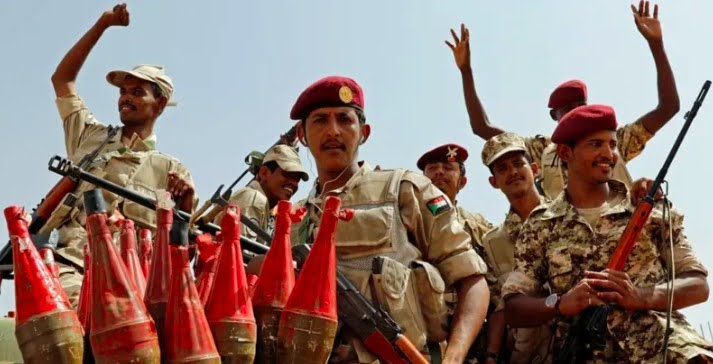
Late on Sunday, the paramilitary Rapid Support Forces (RSF) announced that it had seized control of the Sudanese Armed Forces’ (SAF) 6th Infantry Division base in El Fasher — the army’s final major military installation in the region — triggering fresh waves of fighting across the besieged city.
A “Turning Point,” RSF Says
An RSF spokesperson described the capture as “breaking the back” of the army and its allies, calling it a “turning point” in the conflict and a step toward constructing a “new state that all Sudanese will participate in establishing.”
In promotional videos released by the RSF, fighters are seen celebrating in front of the base’s signage. Reuters verified the location of the footage, though not its precise date. The SAF has not issued a public response at the time of writing.
However, multiple observers caution that control of the base does not yet amount to full control of El Fasher itself. According to Al Jazeera’s correspondent, the army had been under siege for months and had gradually redeployed within the city’s urban area, repositioning itself to more defensible pockets.
If RSF control of the 6th Division is confirmed and consolidated, it would deal a sharp blow to the SAF’s presence in western Sudan. Analysts say the move bolsters RSF bargaining leverage ahead of any negotiated settlement over Darfur. Justin Lynch, managing director of the Conflict Insights Group, told Reuters that RSF’s strategy appears to be to “claim that they represent all of Darfur in negotiations.” Some media outlets now suggest that El Fasher may already be fully under RSF control.
That said, in contested conflict zones, the difference between claiming territory and consolidating control can be stark. Urban warfare, residual pockets of resistance, and concerns of counterattacks will test RSF’s ability to hold what it claims.
El Fasher and its surrounding displacement camps have borne the brunt of a grinding siege for well over a year. UNICEF reports that the city and proximate camps have been cut off from sustained humanitarian access for more than 16 months. Some 260,000 civilians remain trapped inside, about half of them children (≈ 130,000). Meanwhile, over 600,000 people — again, roughly half children — have been displaced from El Fasher and its periphery in recent months.
The health and nutritional toll is staggering. UNICEF data suggests that more than 6,000 children with severe acute malnutrition (SAM) are now effectively untreated, given the suspension of therapeutic feeding services following supply cutoffs. In one week alone, 63 deaths attributable to starvation were reported. Malnutrition among children has soared: acute malnutrition rates are estimated in the tens of thousands, and new cases are doubling compared to previous years.
Cholera and other waterborne diseases are spreading amid collapse of sanitation systems — in North Darfur alone, at least 191 deaths have been recorded in recent months. In the camps of Zamzam and Abu Shouk, repeated attacks and looting have compromised shelter, water, and security for internally displaced persons (IDPs).
In Zamzam camp, the RSF’s own assault in April displaced roughly 406,265 residents (81 % of the camp), some of whom sought refuge in El Fasher (≈ 83,890) while others moved to nearby Tawila (≈ 303,300). As of April 2025, El Fasher locality was hosting about 698,800 IDPs in total.
The UN and rights groups have accused both RSF and SAF of war crimes — particularly widespread violations during the siege. In recent months, verified grave violations against children in North Darfur have numbered over 110 in just one quarter.
The war between RSF and SAF erupted in April 2023, after a power-sharing arrangement unraveled. Since then, tens of thousands have died, and over 12 million people have been displaced internally, with millions more across borders. UNICEF estimates that more than 14 million people now require humanitarian assistance, including nearly 14 million children.
Yet amid global crises, from Ukraine to Gaza, Sudan’s war remains undercovered. Journalists face severe constraints on access, communications and safety, contributing to what aid workers call a “silent catastrophe.”
Diplomatic efforts have yet to yield a breakthrough. Regional mediators—the African Union, IGAD—have repeatedly attempted to broker pauses, yet the violence continues largely uninterrupted. Some analysts warn that without sustained international media attention and political pressure, the conflict may ossify into permanent fragmentation.
What Comes Next
If RSF successfully holds the 6th Division base and secures El Fasher, the balance of power in Darfur could tilt decisively in its favor. That would strengthen its claim to represent Darfur at the negotiating table, potentially earmarking western Sudan as a quasi–RSF domain while the SAF concentrates elsewhere. Whether that leads to partition, federal reshaping, or continued stalemate is uncertain.
But the humanitarian consequences are immediate and severe. With starvation as a weapon of war, the newly conquered base may give little relief to civilians already on the edge of collapse. As anti-civilians assaults mount, displacement surges again, and diseases spread, El Fasher could transform from a battleground into a humanitarian tomb.
International actors, in turn, face a test: whether to break silence and demand not just ceasefires but accountability; whether to prosecute suspected war criminals; whether to pressure supply corridors for life-saving aid; whether to build international oversight mechanisms amid a state in disintegration.
In the days ahead, the veracity of RSF’s claims will be tested on the ground — not just by observers, but by the resilience of a besieged population, trapped in the crossfire of a war few have seen.